Artificial Intelligence is becoming a key driver of manufacturing transformation, but successful AI adoption does not begin with algorithms. It begins with understanding whether your factory, data systems, people, and processes are ready for intelligent automation.
An AI maturity assessment for manufacturing helps industrial organizations evaluate their current readiness for AI, identify operational gaps, and build a practical roadmap toward Industry 4.0 transformation. For manufacturers dealing with legacy machines, disconnected systems, manual reporting, and fragmented data, this assessment becomes the foundation for scalable digital transformation.
At Datafaktory, we view AI maturity not as a technology checklist, but as a business transformation exercise. The goal is to help manufacturers convert operational data into measurable business value through smarter decisions, better processes, and scalable data products.
Why AI Maturity Assessment Matters in Manufacturing
Many manufacturers begin AI projects with enthusiasm but struggle to scale beyond pilot initiatives. The issue is rarely the AI model itself. In most cases, the challenge lies in poor data quality, disconnected shop floor systems, unclear KPIs, limited workforce readiness, or lack of alignment between IT and operations.
An AI readiness assessment helps answer critical questions such as:
- Is your production data accurate, accessible, and usable?
- Are your machines, sensors, and systems connected?
- Can your current infrastructure support real-time analytics?
- Are your teams prepared to use AI-driven insights?
- Which use cases can deliver measurable ROI first?
Without answering these questions, AI initiatives can become isolated experiments rather than business transformation programs.
Common Reasons Manufacturing AI Projects Fail
- Lack of Data ReadinessAI depends on reliable data. If machine data, ERP data, maintenance logs, quality records, and production reports are stored separately, AI systems cannot generate complete insights.
Manufacturers often face challenges such as:
- Inconsistent data formats
- Missing historical data
- Manual Excel-based reporting
- Disconnected machines and sensors
- Poor data governance
- Limited real-time visibility
Before investing in predictive maintenance, quality analytics, or autonomous decision-making, manufacturers must first strengthen their data foundation.
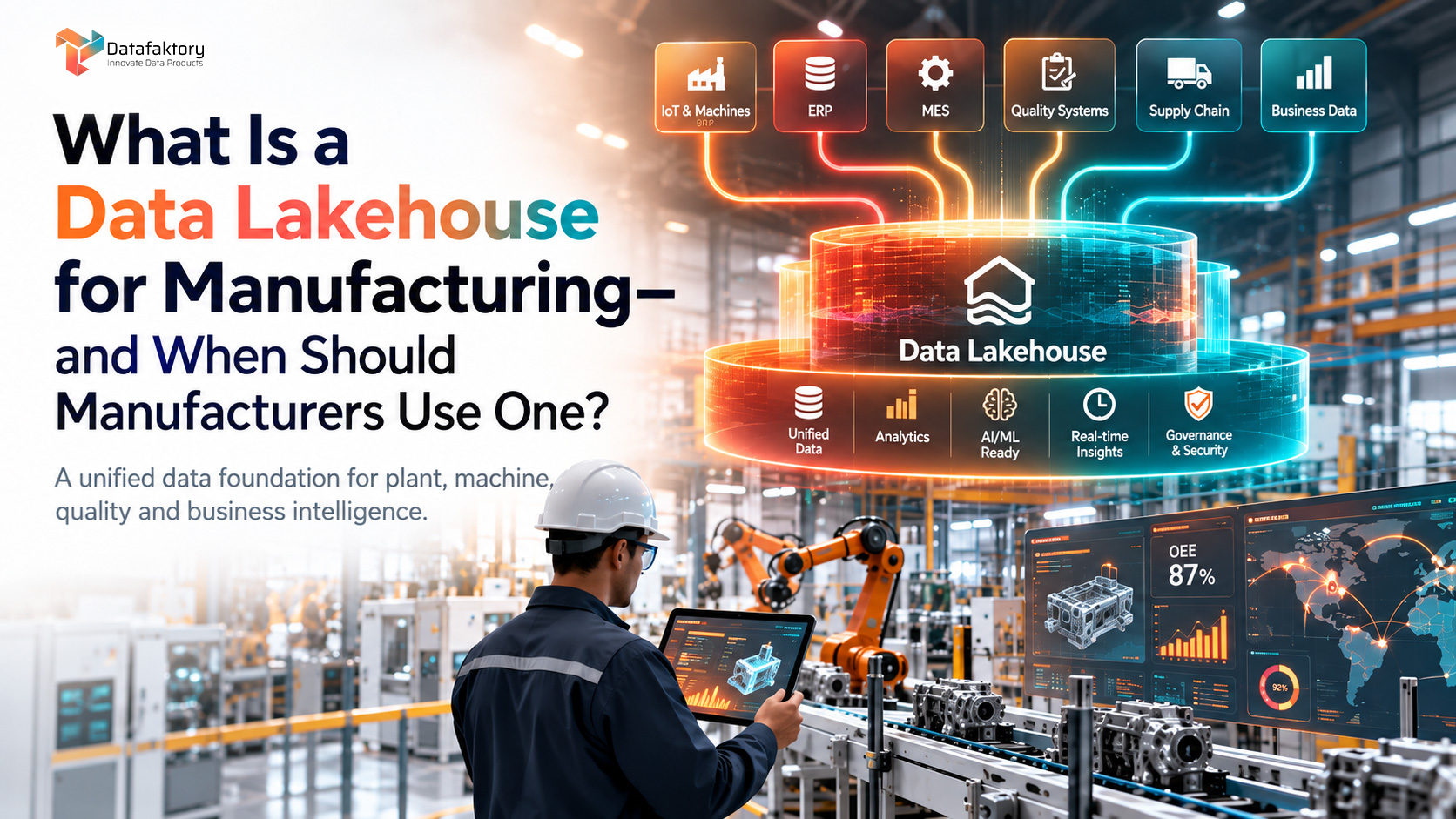
- Disconnected Shop Floor SystemsMany factories operate with a mix of legacy PLCs, modern sensors, ERP systems, MES platforms, and manual processes. When these systems do not communicate with each other, data remains trapped in silos.
Breaking these silos through industrial data integration, IIoT connectivity, and secure data pipelines is a key step in manufacturing AI readiness. - AI Projects Without Clear Business KPIsAI should not be implemented only because it is trending.
Every AI initiative must connect to measurable business outcomes such as:- Improved Overall Equipment Effectiveness
- Reduced machine downtime
- Lower maintenance costs
- Reduced scrap rate
- Improved production throughput
- Better demand forecasting
- Faster decision-making
An AI maturity assessment helps prioritize use cases based on business impact and implementation feasibility.
Key Areas Covered in an AI Maturity Assessment
- Data Infrastructure ReadinessThis stage evaluates whether the organization has the right data architecture to support AI and analytics. It includes reviewing data sources, storage systems, cloud infrastructure, edge computing capabilities, data pipelines, and integration between operational and business systems.
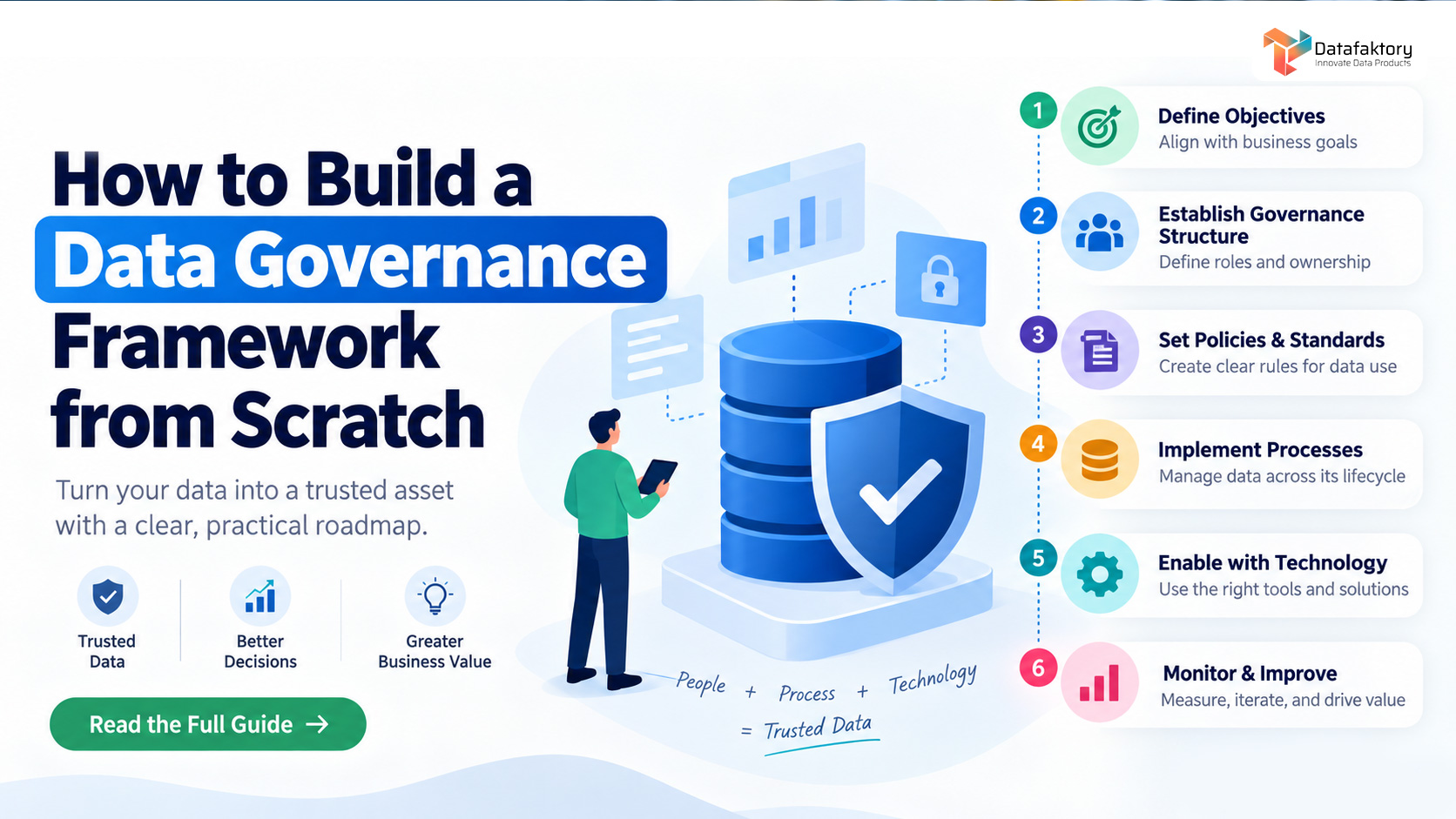
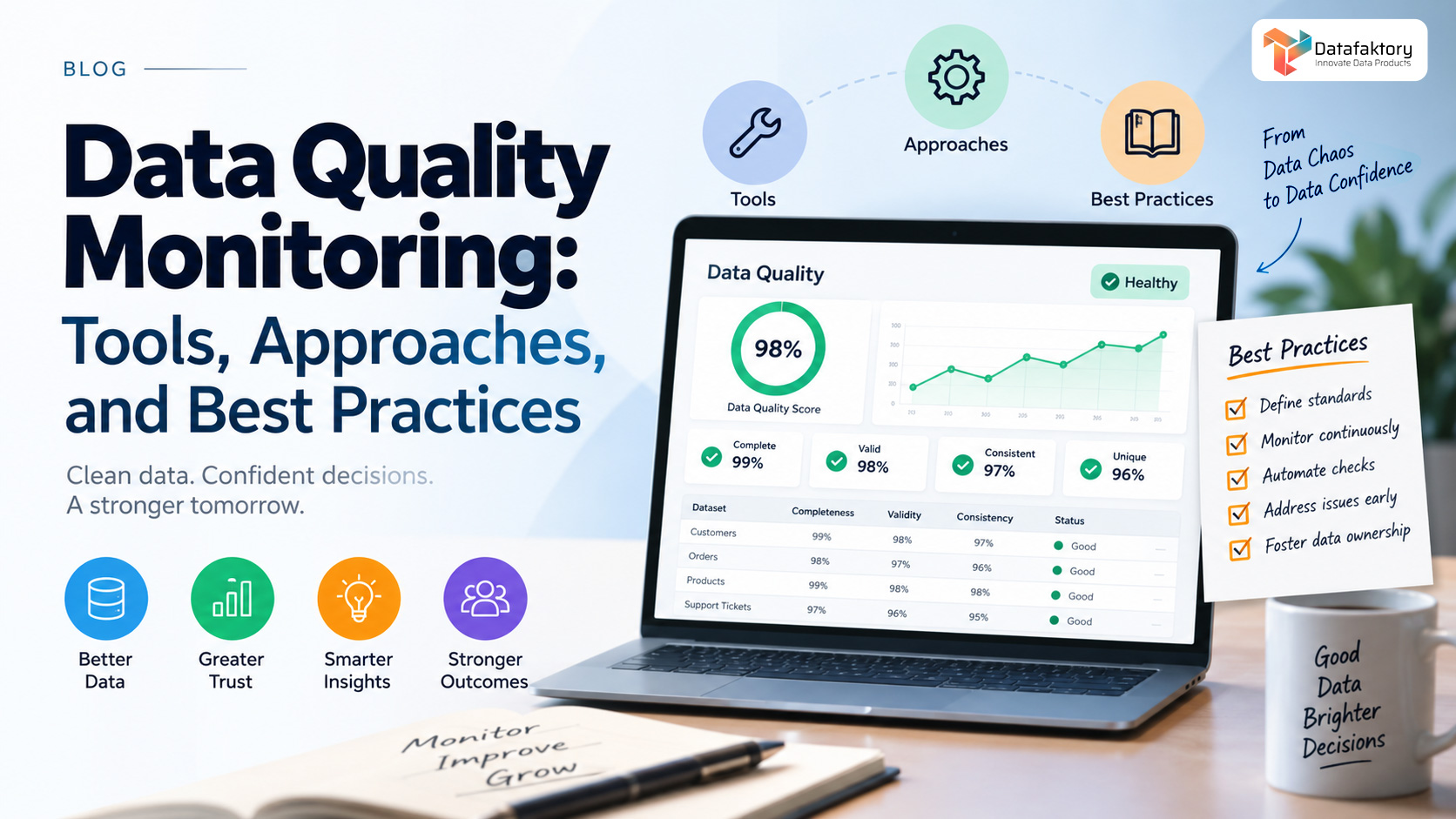
- Data Governance and QualityAI systems are only as strong as the data behind them. The assessment reviews whether data is accurate, complete, secure, standardized, and accessible to the right teams.This includes:
- Data ownership
- Data quality rules
- Security and access control
- Master data management
- Reporting consistency
- Historical data availability
- Industry 4.0 and IIoT ConnectivityManufacturing AI requires connected assets. The assessment reviews machine connectivity, sensor deployment, industrial communication protocols, and the ability to collect real-time production data.
Technologies such as OPC-UA, MQTT, edge computing, and cloud platforms can help manufacturers move from disconnected systems to integrated smart factory operations. - Workforce and Cultural ReadinessAI adoption is not only a technical change. It also requires people to trust data-driven decisions. Operators, engineers, maintenance teams, and leadership must understand how AI insights support their daily work.
A strong assessment evaluates:
- Digital skills
- Change readiness
- Decision-making culture
- Training requirements
- Cross-functional collaboration
- Leadership alignment
- AI Use Case PrioritizationNot every AI use case should be implemented immediately. A maturity assessment helps identify the right starting point based on impact, complexity, available data, and expected ROI.
Common manufacturing AI use cases include:
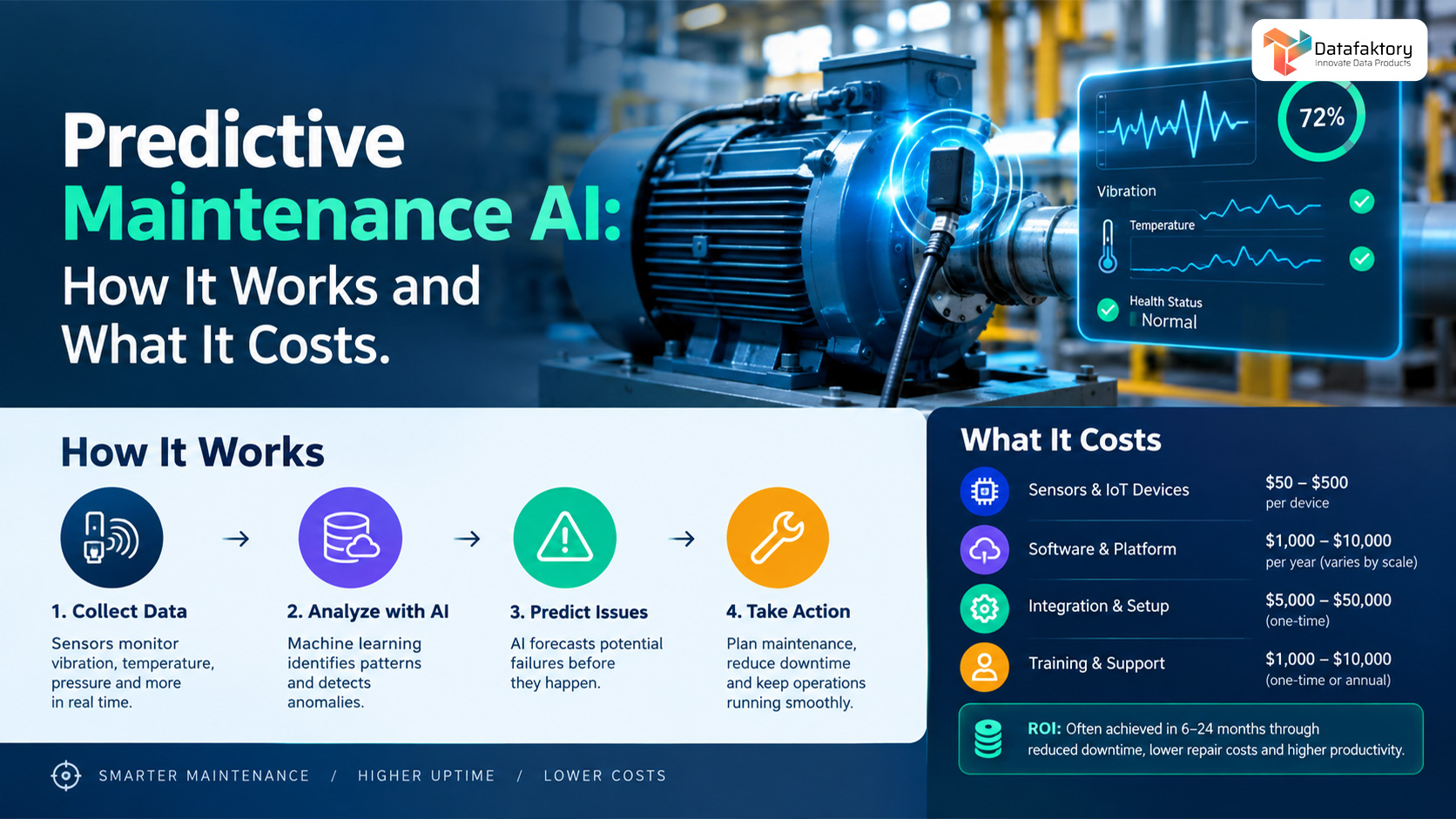
- Predictive maintenance
- Quality inspection analytics
- Production planning optimization
- Energy consumption optimization
- Scrap reduction
- Demand forecasting
- Supply chain intelligence
- Real-time performance dashboards
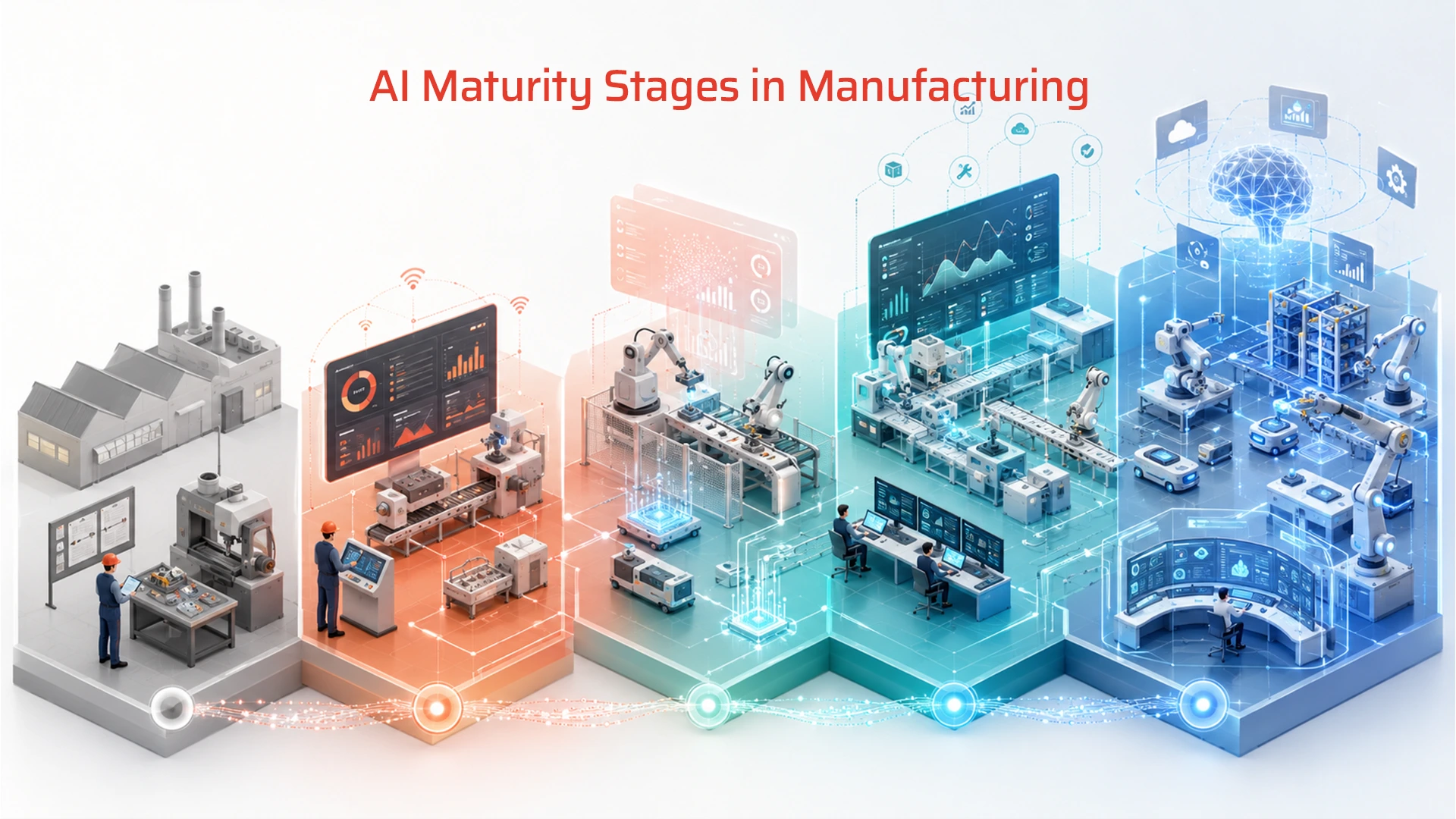
AI Maturity Stages in Manufacturing
Manufacturers typically move through four maturity stages:
Stage 1: Manual and Ad-Hoc
Data is collected manually through spreadsheets, paper records, or isolated systems. Reporting is reactive and decision-making depends heavily on experience.
Stage 2: Connected and Descriptive
Machines and systems begin to connect. Dashboards provide visibility into what happened, but insights are mostly descriptive.
Stage 3: Predictive and Data-Driven
Manufacturers use historical and real-time data to predict failures, identify risks, improve planning, and support proactive decision-making.
Stage 4: Intelligent and Autonomous
AI systems support automated recommendations, self-optimizing processes, and continuous improvement across production, maintenance, quality, and supply chain operations.
How AI Maturity Supports Industry 4.0 Transformation
AI maturity assessment is closely linked to Industry 4.0 readiness. It helps manufacturers understand how prepared they are to move toward smart factory operations.
A strong Industry 4.0 roadmap connects:
- Data strategy
- AI readiness
- Smart manufacturing systems
- Digital transformation goals
- Workforce capability
- Business performance metrics
This approach ensures AI is not treated as a standalone technology project, but as part of a larger transformation journey.
Measuring ROI from Manufacturing AI
To justify AI investment, manufacturers must connect initiatives to clear financial and operational outcomes.
Important KPIs include:
- Overall Equipment Effectiveness
- Machine downtime
- Maintenance cost
- Scrap rate
- Production throughput
- Energy consumption
- Quality rejection rate
- Forecast accuracy
- Inventory efficiency
The best approach is to start with high-impact, low-complexity use cases. For example, predictive maintenance on a critical machine or quality analytics for a specific production line can show early measurable value and build internal confidence.
Datafaktory’s Approach to AI Readiness in Manufacturing
Datafaktory helps manufacturers assess AI maturity through a practical, business-led, and data-driven methodology.
Our approach focuses on:
- Understanding current operational and data maturity
- Identifying gaps in infrastructure, governance, and systems
- Mapping AI opportunities to business KPIs
- Prioritizing use cases based on ROI and feasibility
- Creating a phased roadmap for Industry 4.0 transformation
- Building scalable data products that support long-term value creation
We believe AI success in manufacturing depends on more than technology. It requires the right data foundation, the right operating model, and the right transformation roadmap.
Conclusion
An AI maturity assessment for manufacturing helps organizations move from isolated digital experiments to scalable, measurable transformation. It provides clarity on where the organization stands today, what gaps need to be addressed, and which AI use cases can deliver the strongest business value.
For manufacturers preparing for Industry 4.0, the first step is not simply adopting AI. The first step is understanding readiness.
Datafaktory helps manufacturing leaders evaluate AI readiness, strengthen data foundations, and build practical roadmaps for intelligent, data-driven transformation.