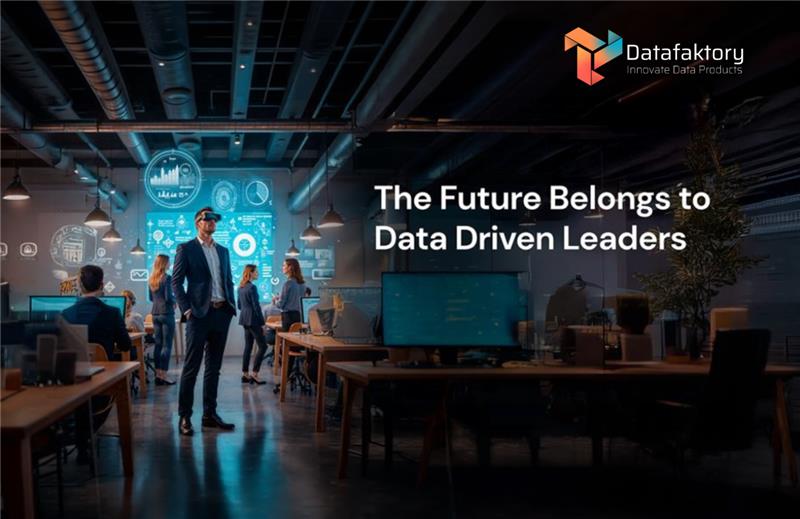
At Datafaktory, we believe that every great decision begins with great data. The future belongs to those who understand how to turn numbers into narratives and insights into action.
Why Data-Driven Leadership Matters
Modern businesses operate in complex, rapidly changing environments. Leaders who rely on data don’t just react—they predict and prepare.
Here’s why this approach is redefining leadership:
- Smarter Decision-Making: Data provides clarity, reduces uncertainty, and allows leaders to make confident choices backed by evidence.
- Customer-Centric Strategies: Analytics uncover customer patterns and preferences, enabling leaders to create personalized experiences.
- Efficiency and Growth: By identifying performance gaps and opportunities, leaders can optimize operations and drive innovation.
- Sustainable Advantage: Data-driven strategies keep organizations agile and competitive in an ever-evolving marketplace.
When used effectively, data becomes more than a tool — it becomes a strategic advantage.
The Traits of Data-Driven Leaders
Data-driven leaders combine analytical thinking with strategic vision. They are not just decision-makers; they are insight interpreters and data storytellers.
Their key traits include:
- Curiosity: They constantly question and explore what data reveals.
- Clarity: They focus on relevant metrics that align with business goals.
- Collaboration: They encourage teams to think data-first across departments.
- Adaptability: They embrace new tools and technologies to enhance decision-making.
By cultivating these traits, leaders build organizations that thrive on intelligence, not assumptions.
- Building a Data-Driven Culture
- Becoming a data-driven leader start with creating a culture where data is accessible, trusted, and actionable.
- Empower teams with the right analytics tools.
- Train employees in data literacy to interpret and use insights effectively.
- Integrate data systems across departments for a unified view of the organization.
- Leverage AI and predictive analytics to anticipate challenges and opportunities.
- When data becomes part of every decision, innovation follows naturally.
- Conclusion
The future belongs to leaders who understand that data is not just a resource—it’s a responsibility. Those who use it wisely will guide their organizations toward smarter growth, better customer experiences, and lasting success.
At Datafaktory, we empower businesses to unlock the power of data through AI-driven analytics, visualization tools, and data strategy consulting. Let’s build a future where every decision is powered by intelligence.