
In today’s data-driven landscape, enterprises are racing to unlock value from their data. But a critical question often stalls progress:
Should you build a data platform first, or focus on data products?
At first glance, a data platform seems like the logical starting point. It centralizes data, ensures governance, and provides scalable infrastructure. Think of it as the foundation — pipelines, storage, and processing capabilities that enable teams to access and manage data efficiently.
On the other hand, a data product is designed with the end-user in mind. It’s not just data — it’s a packaged, usable asset that delivers value. Whether it’s a dashboard, API, or machine learning model, a data product answers a specific business need.
So, what comes first?
The answer lies in your business maturity and priorities.
If your organization struggles with fragmented data, inconsistent definitions, or poor data quality, investing in an enterprise data platform is essential. Without it, scaling data products becomes chaotic and unsustainable.
However, many enterprises fall into the trap of over-engineering platforms without delivering immediate value. This leads to high costs and low adoption. That’s where the “data as a product” mindset changes the game.
Instead of building a platform in isolation, leading organizations are taking a product-led approach:
• Start with a high-impact use case
• Build a focused data product
• Develop platform capabilities incrementally to support it
This hybrid strategy ensures that your platform evolves with real business needs, not theoretical ones.
Ultimately, it’s not about choosing one over the other. It’s about sequencing smartly:
• Use data products to demonstrate value
• Use the platform to scale that value
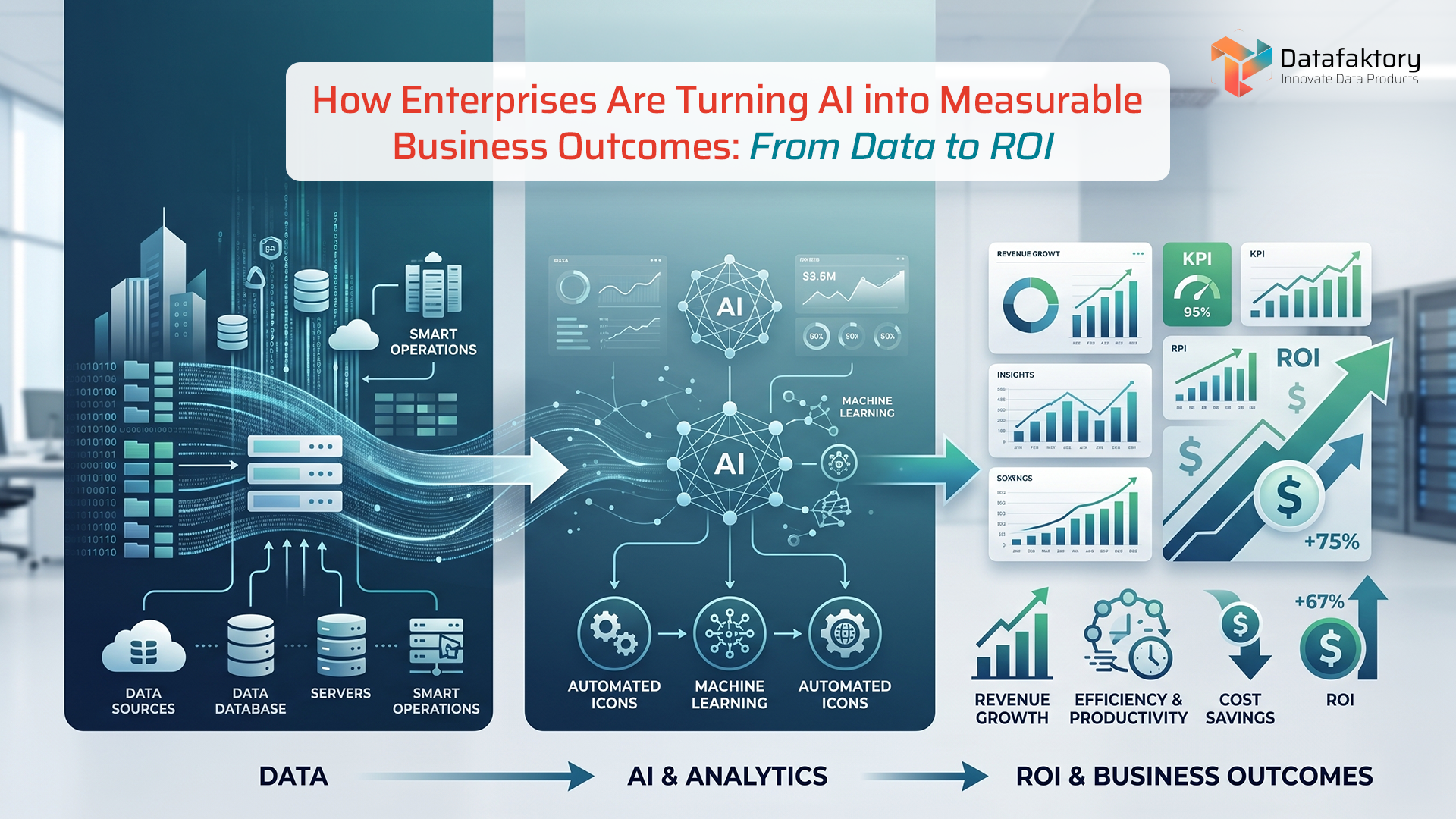
Enterprises that get this balance right don’t just manage data — they monetize it, operationalize it, and turn it into a competitive advantage.
At Datafaktory, we help enterprises strike this balance — building AI-ready data foundations while delivering high-impact data products that drive measurable business outcomes.