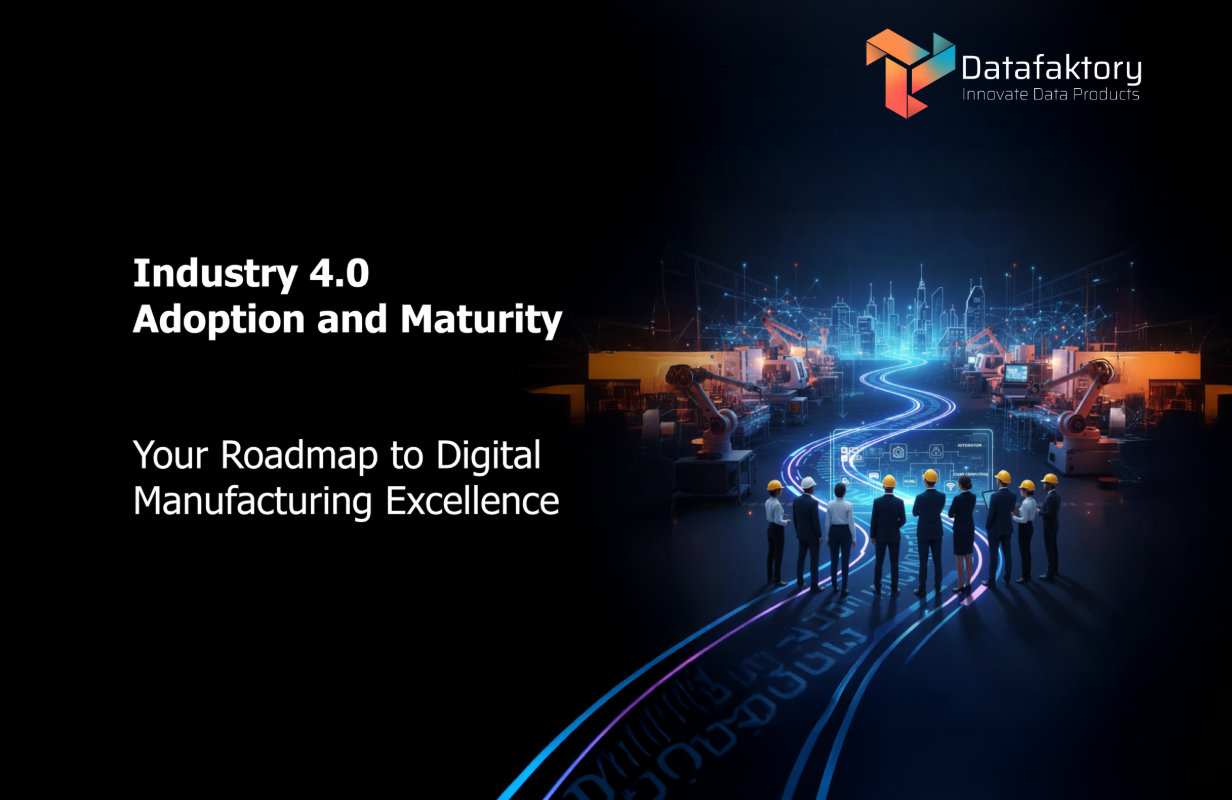
The answer lies in understanding Industry 4.0 maturity models—frameworks that serve as your GPS for navigating the complex landscape of digital manufacturing transformation.
while 94% of global manufacturing companies report that Industry 4.0 technologies helped them maintain operations during recent crises, the vast majority are still in the early stages of their digital maturity journey. Most manufacturers find themselves caught between recognizing the need for transformation and knowing how to execute it systematically.
The challenge isn’t just about adopting new technologies — it’s about understanding which technologies to implement, when to implement them, and how to measure progress along the way.
Industry 4.0 maturity isn’t simply about how many smart sensors you’ve deployed or whether you’re using AI in your operations. It’s a holistic measure of your organization’s readiness and capability across three critical dimensions:
This encompasses your ability to leverage data-driven insights for production planning, predictive maintenance, and real-time process optimization. It’s about moving from reactive to predictive to prescriptive analytics.
Your digital infrastructure maturity—from basic connectivity and data collection to advanced edge computing and cloud integration. This is the backbone that enables everything else.
Perhaps the most overlooked aspect: your workforce’s digital readiness, change management capabilities, and organizational culture’s adaptability to digital transformation.
Digital transformation is the process of using digital technologies, data, automation, and AI to improve how a business operates, serves customers, and grows. It is about fundamentally changing how an organization works, makes decisions, manages information, and creates long-term value.
A consulting partner helps companies move from technology confusion to practical business outcomes. They study existing processes, identify improvement areas, and recommend digital solutions aligned with business goals.
A digital transformation assessment is a structured review of a company’s current digital maturity. It evaluates how effectively the business uses technology, data, workflows, automation, and digital systems across departments
Digital transformation helps businesses automate repetitive tasks, improve productivity, leverage real-time data, and deliver better customer experiences — while enabling leadership to make faster, data-backed decisions.